
The Working Group proposes full decriminalisation of adult voluntary sex work from a human rights perspective, as it holds the greatest promise to address systemic discrimination and violence and the impunity for the violations of sex workers’ rights.
2023-2024 Community Support Line
24 Hour Support Line 1-877-776-2004
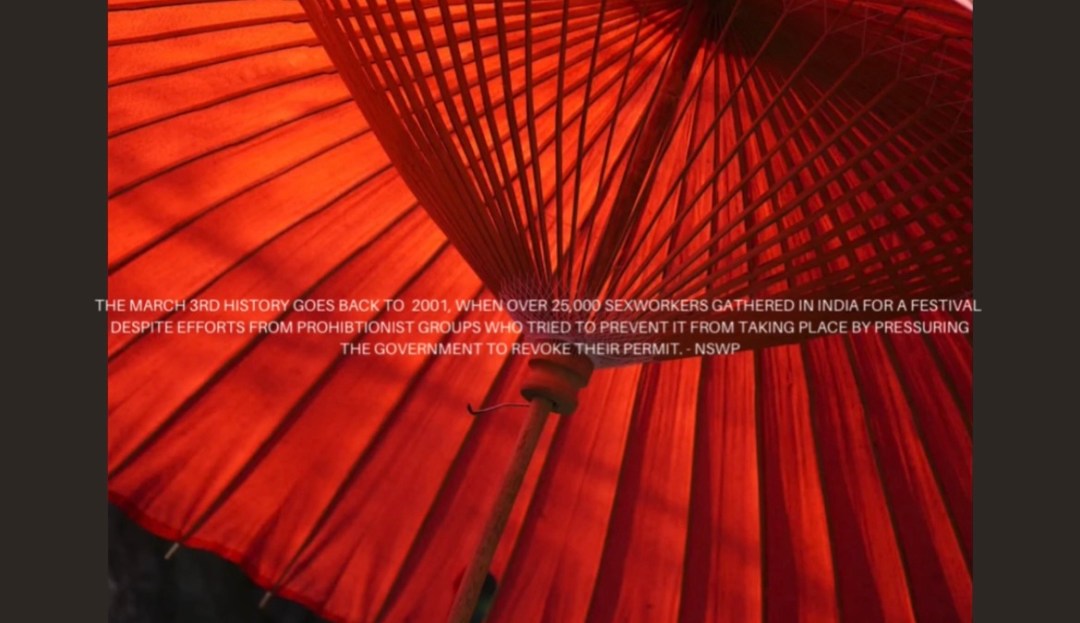
2023 June 3rd: Intl S/W Day
On June 2, 1975, over 100 sex workers in Lyon, France, engaged in a civil disobedience action that involved a week-long occupation of St. Nizer Church. The aim of the action was to generate a high-profile campaign which would highlight the State sanctioned police harassment of street based sex workers, the disgraceful in-action of police in responding to violence perpetrated against the Lyon sex worker community by a serial sexual assault offender, and the refusal of the French Minister for Women to engage in dialogue with French sex workers.
2023-2024 Feature: The Pennsylvania Project on SBBi, Sx Work & Viminal Services
Melanie's 5th appearance on The Pennsylvania Project radio show with Ken Krawchuck.
2023 The Typology of Modern Slavery – Polaris
A detailed typology of trafficking in persons, detailing twenty-five different categories, was developed by Polaris in 2017.

2023 PAVE – Supporting Survivors of Sexual Violence
May is Mental Health Awareness Month!
Here at PAVE we are inspired and honored to support survivors. No matter where you are in your healing journey, we're glad you're here.
2023 8/23 Live Library Discussion
Following up on the May 18th appearance discussing SBBi and the SWCSL on The Pennsylvania Project, selections will be shared from an early Goddard study. Lansdale Library 6/28 7 PM 301 Vine Street, LANSDALE

2023 In Memory: Carol Leigh
May 20th Premier The Life of- Carol Leigh — Read on carolleighmemorial.com/
2023 Word Press Prompt
Do you vote in political elections? Yes! Especially local elections for judges, district attorneys, sheriffs, comptrollers. Survivors and workers ARE constituents!
2023 Word Press Prompt
Do you have a quote you live your life by or think of often? A favorite quote? Yes: It takes a village! It takes a village is an idiom that means many people must cooperate to achieve a goal. Usually, quoting the idiom it takes a village is used to indicate that one is acknowledging … Continue reading 2023 Word Press Prompt
2022-2023 EARN IT Act
Daily Dots Jacob Seitz Posted on Apr 18, 2023 The EARN IT Act, a controversial bill that could upend Section 230, is set to be reintroduced in Congress despite twice being hit with massive public opposition, according to a spokesperson for Sen. Lindsey Graham (R-S.C.)
The Eliminating Abusive and Rampant Neglect of Interactive Technologies Act, (EARN IT) Act, was originally introduced in 2020 and faced strong opposition from digital rights groups from the start. It failed to reach the President’s desk twice, but Graham (R-S.C.) and Sen Richard Blumenthal (D-Conn.) are determined to try again.
The bill seeks to amend Section 230 of the Communications Decency Act. This much-bemoaned telecommunications rule essentially shields tech and social media companies from blame for hateful or harmful content published on their platforms. The rule has been used repeatedly by major tech companies to absolve themselves of liability in court. The Supreme Court is set to rule on a case that could change the rules of 230 as we know it this fall, but the EARN IT Act could make things much worse for internet users by stripping protections from social media companies for using to cave to government demands and increasing surveillance on citizens.
Graham’s spokesperson said they intended to introduce the bill sometime next week.
The legislation would remove Section 230 protections from platforms if they violated child sexual abuse material (CSAM) laws at the state and federal level, creating a huge problem for platforms that are hesitant to moderate or police their platforms heavily.
The bill was criticized in the past for being too broad and creating sweeping measures that could infringe on the digital privacy of Americans, and this latest attempt is likely to be more of the same.

Protected: 2023-2024 Meet The Face Behind PA Workers Survivors
There is no excerpt because this is a protected post.
 Worker Survivor Community Archive
You must be logged in to post a comment.