

May 20th Premier The Life of- Carol Leigh — Read on carolleighmemorial.com/
2023 Word Press Prompt
Do you vote in political elections? Yes! Especially local elections for judges, district attorneys, sheriffs, comptrollers. Survivors and workers ARE constituents!
2023 Word Press Prompt
Do you have a quote you live your life by or think of often? A favorite quote? Yes: It takes a village! It takes a village is an idiom that means many people must cooperate to achieve a goal. Usually, quoting the idiom it takes a village is used to indicate that one is acknowledging … Continue reading 2023 Word Press Prompt
2022-2023 EARN IT Act
Daily Dots Jacob Seitz Posted on Apr 18, 2023 The EARN IT Act, a controversial bill that could upend Section 230, is set to be reintroduced in Congress despite twice being hit with massive public opposition, according to a spokesperson for Sen. Lindsey Graham (R-S.C.)
The Eliminating Abusive and Rampant Neglect of Interactive Technologies Act, (EARN IT) Act, was originally introduced in 2020 and faced strong opposition from digital rights groups from the start. It failed to reach the President’s desk twice, but Graham (R-S.C.) and Sen Richard Blumenthal (D-Conn.) are determined to try again.
The bill seeks to amend Section 230 of the Communications Decency Act. This much-bemoaned telecommunications rule essentially shields tech and social media companies from blame for hateful or harmful content published on their platforms. The rule has been used repeatedly by major tech companies to absolve themselves of liability in court. The Supreme Court is set to rule on a case that could change the rules of 230 as we know it this fall, but the EARN IT Act could make things much worse for internet users by stripping protections from social media companies for using to cave to government demands and increasing surveillance on citizens.
Graham’s spokesperson said they intended to introduce the bill sometime next week.
The legislation would remove Section 230 protections from platforms if they violated child sexual abuse material (CSAM) laws at the state and federal level, creating a huge problem for platforms that are hesitant to moderate or police their platforms heavily.
The bill was criticized in the past for being too broad and creating sweeping measures that could infringe on the digital privacy of Americans, and this latest attempt is likely to be more of the same.

Protected: 2023-2024 Meet The Face Behind PA Workers Survivors
There is no excerpt because this is a protected post.
2023 SVSTA
Albany Spring 2023
2023-2024 FEATURE: Antimony Poetry by Fred Hatt
And why does so much money still flow to those who just take things by force?
2022-2024 FEATURE: Poetry by Kawoni
Excerpt: My birth name is April, but that is not who I am. Kawoni in Cherokee means flower moon, it is the season for many things; new.
2022 SAFE SEX Workers Study Act
“If we are going to combat trafficking we cannot pass policies that leave vulnerable populations in the shadows. The potential impacts of these policies must be examined before legislation is created, so we can prevent repeating the mistakes of SESTA- FOSTA. If the goal is to help sex workers and trafficked people, then we must focus on approaches that have been proven to work, and proven to protect.” Phoenix Calida, Communications Director, Sex Workers Outreach Project-USA
2022 (I/We Support) SAFE SEX Workers Study Act
On September 14, 2022—Sex Worker Pride Day—75 organizations representing sex worker rights, public health, technology, reproductive justice, anti-trafficking, racial justice, and civil and human rights, sent a letter to Congress urging passage of the “SESTA and FOSTA Examination of Secondary Effects for Sex Workers Study Act” or the SAFE SEX Workers Study Act. This bill, reintroduced on March 3, 2022—International Sex Workers Rights Day—in the House by Representative Ro Khanna, and in the Senateby Senator Elizabeth Warren, would study the impact of SESTA/FOSTA on the wellbeing and rights of people who trade sex, including sex workers and human trafficking survivors.


2022 We Remember: Author & Ally Lael Morgan
Lael Morgan, historian and author of Good Time Girls of the Alaska-Yukon Gold Rush dies at 86. Friend and mentor to The ESPLER Project, ESPU, CUSP, Workers/Survivors and many others.
2022 FEATURE: Article by Rachel West for the San Francisco Bay View
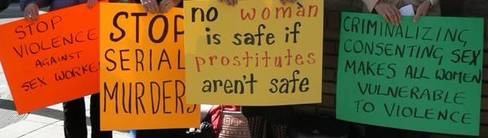
FEATURE ARTICLE by Rachel West: The Safer Streets for All Act (SB 357), repealing loitering for the intent to engage in prostitution (California Penal code § 653.22), was signed into law by Gov. Newsom on July 1. This code has led to the criminalization of otherwise legal activities like walking or standing in public, resulting in the harassment of Black and Brown, LGTBQ+ communities, mostly women, for simply looking like a “sex worker.” The bill also allows a person convicted of loitering to petition a court for the dismissal and sealing of records.


You must be logged in to post a comment.