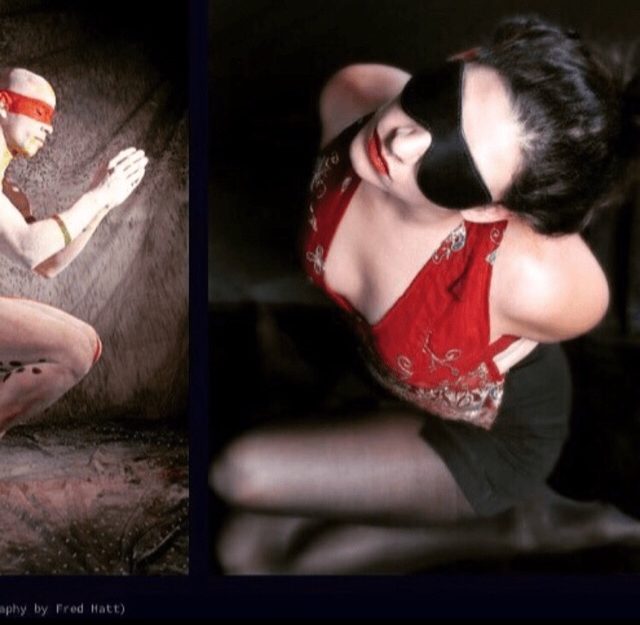

This October, Rigby & Peller is proud to support Free the Girls, a 501(c)(3) non-profit organization that provides job opportunities for survivors of sex trafficking in developing countries. Gently used bras are collected* and donated to these women as starting inventory for their own business selling bras. Through the collection of bras in Western countries, Free the Girls is able to educate people and organizations about human trafficking issues globally. *Boutique exclusive event, store credit earned can be used in boutiques only.
Instrument of Crime: Condoms, Prostitution, Prosecutors and Public Safety in Pennsylvania
Instrument of Crime: Condoms, Prostitution, Prosecutors and Public Safety in Pennsylvania Philadelphia Convention Center 106AB Presentation: Friday 10/5/2018 10:45 AM Outlawed in California, New York, and Washington D.C., since 2012 Pennsylvania prosecutors have been using Comstock Act era tactics in an effort to detain prostitutes to combat trafficking. Is charging individuals for Instruments of Crime (IOC) effective policing tactic in ending human trafficking; or is contributing to challenges in addressing important public health risks surrounding HIV/AIDS, Hepatitis, and sexually transmitted diseases? Philadelphia and Pittsburgh are combining forces for important advocacy work to draw attention to these practices.
Isabella Simonetti | Risky business: the case for legalizing prostitution | The Daily Pennsylvanian
According to data sent to me by the Philadelphia Police Department, from August 2017 to July 2018, the authorities arrested people for soliciting sex work 651 times. Inevitably, a large number of these arrests were traumatic for the people involved, many of whom were just trying to make enough money to survive.
Reason Magazine On FOSTA
Reason Magazine: A 2016 study funded by the Justice Department concluded that the total number of juveniles in the sex trade in the United States was about 9,000 to 10,000. The study also found that only about 15 percent of the children relied on pimps and that the average age of entry into the sex trade was 15.8 years.
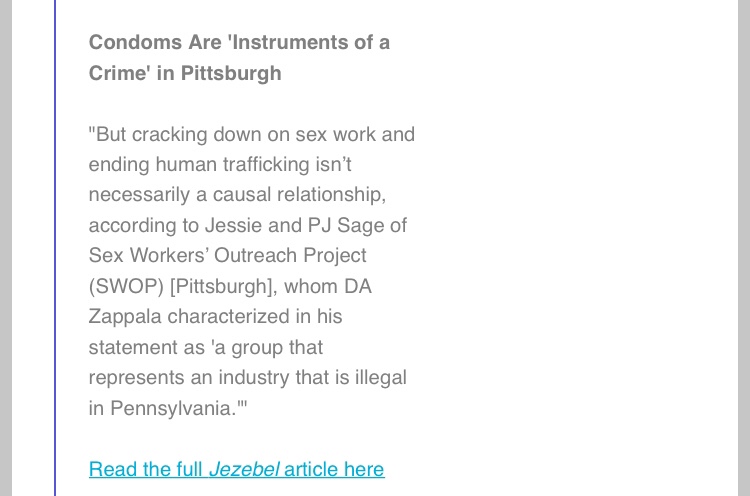
Advocates for Sex Workers Send Open Letter to Allegheny District Attorney Stephen Zappala Opposing Criminalization of Condom Possession
The letter notes that criminalizing condoms “has a chilling effect on Pittsburghers' willingness to carry and use condoms, especially those who are most vulnerable to contracting HIV/AIDS and other STIs including women and men of color, LGBTQ people, young people, victims of trafficking, and people in the sex trades.”
Platforms Which Now Discriminate Against Sex Workers –
We’ve found over 100 companies, institutions, and discrete products who now discriminate against sex workers and performers (like Skype… — Read on survivorsagainstsesta.org
Dear District Attorney Zappala
The Sex Worker’s Outreach Project (SWOP) Pittsburgh is disappointed in the District Attorney Zappala’s response to the open letter we and several other organizations (including ACLU of Pennsylvania, Women's Law Project, #SurvivorsAgainstSESTA and Planned Parenthood of Western Pennsylvania) opposing several practice that endanger the citizens of Allegheny County: 1.) police and prosecutors’ practice of citing condom possession as evidence of intent to engage in prostitution-related crimes, 2.) police seizure of condoms and other contraceptives, and 3.) the practice of adding the more severe possessing-instrument-of-crime (“PIC”) charges under 18 Pa.C.S. § 907 when defendants are charged with prostitution.
Collateral Damage: Aussies Impacted By US FOSTA/SESTA
The Fight Online Sex Trafficking Act (FOSTA) passed Congress and was signed into law by US President Donald Trump back in April. It was intended to target websites hosting ads for illegal sex services, such as Craigslist, Backpage and Cracker. But the same websites are used by legitimate, adult, consenting sex workers all over the world, including in Australia. Sex workers here were bracing for the impact of an effective ban on advertising, and for many the financial losses have surpassed their worst expectations.
Support Safety: Oppose SB 1204
Support Safety: Oppose Bill SB 1204 that criminalizes sex workers associating with each other or with supporters for safety, information and support.
After FOSTA- Many of the Systems and Institutes that are Supposed to Protect us are Sent to Erase us –Coyote RI
After FOSTA- Many of the Systems and Institutes that are Supposed to Protect us are Sent to Erase us – Coyote RI — Read on coyoteri.org/wp/after-fosta-many-of-the-systems-and-institutes-that-are-supposed-to-protect-us-are-sent-to-erase-u/
Pa Sen. Bob Casey’s letter for Workers/Survivors to understand the FOSTA/SESTA facts
Senator Rob Portman of Ohio introduced S. 1693, the Stop Enabling Sex Traffickers Act of 2017, on August 1, 2017. The legislation amends Section 230 to ensure that those who run sites that knowingly facilitate sex trafficking can be held accountable for their actions in civil or criminal court. Representative Ann Wagner of Missouri introduced H.R. 1865, the Allow States and Victims to Fight Online Sex Trafficking Act (FOSTA) on April 3, 2017. This bill imposes criminal penalties on a person who facilitates sex trafficking in interstate commerce.

Kitty Stryker on FOSTA/SESTA
What the FOSTA/SESTA Anti-Sex Trafficking Bill Means And what it means for sex workers. 2018-02-23 Kitty Stryker | Teen Vogue

Oakland event March 19: Sex worker collective Empower from Thailand
Great to hear the discussion in Philadelphia. Safe travels and successful journey to EMPOWER.
 Worker Survivor Community Archive
You must be logged in to post a comment.